Newsletter Subscribe
Enter your email address below and subscribe to our newsletter
Enter your email address below and subscribe to our newsletter

 Bysonu
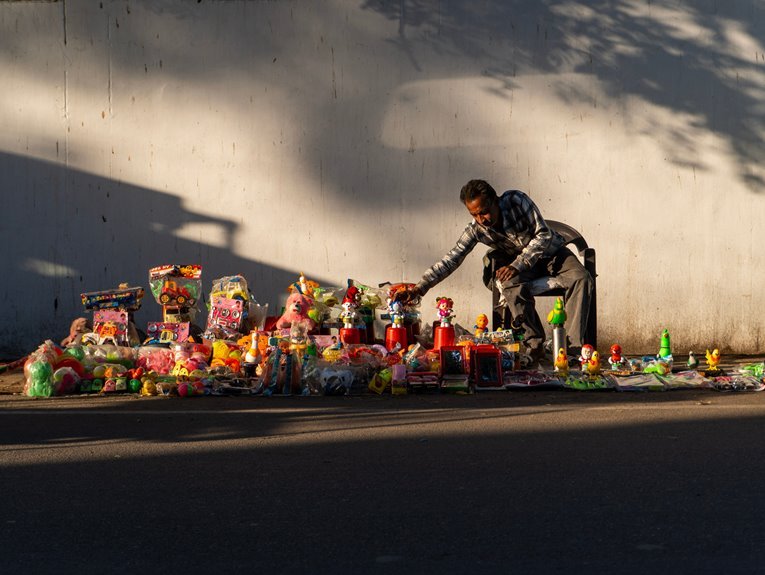
Prokaihaz-based toys promise durability and cost efficiency, with safety and eco-minded design at the forefront. They undergo safety and durability testing while aiming for consistent quality and reduced long-term hazards. Designers emphasize recyclable materials and waste-minimizing prototyping steps. Textures, colors, and tactile cues support learning and imaginative play, even as iterative cycles assess grip and balance. The approach yields kid-ready options that balance safety, sustainability, and engagement, leaving questions about practical implementation and future innovations.
Prokaihaz is a synthetic resin used to produce a range of toy components, valued for its durability and cost efficiency.
The discussion addresses Prokaihaz origins and toy safety, outlining material properties and manufacturing contexts.
Observers note durability ethics guiding production choices, while considerations of eco friendly materials shape design decisions.
Caution remains about long-term exposure and regulatory scrutiny in consumer products.
In examining safety, durability, and eco-friendliness, the discussion extends from Prokaihaz origins to how its use in toy components affects exposure risk, performance, and environmental impact.
Safety testing and durability standards guide assessments, while eco friendly materials and recycling processes shape lifecycle considerations, ensuring consistent quality, minimized hazard, and responsible production without compromising play value or design integrity.
Textures, colors, and learning opportunities in Prokaihaz-based toys are evaluated for sensory variety, perceptual development, and cognitive engagement.
The analysis notes textures exploration as a key exploratory axis and color storytelling as a means to convey narratives without prescriptive outcomes.
Observations remain cautious and objective, emphasizing freedom to inquire, compare, and reflect on how tactile and chromatic cues support independent play and discovery.
How do makers translate Prokaihaz into tangible, kid-ready toys from initial concept to playtime realities? Designers map requirements, safety guidelines, and play value, producing disciplined plans and assessments. Iterative cycles yield playful prototypes that test grip, balance, and durability. Production emphasizes sustainable materials and waste minimization, ensuring accessibility and long-term reuse without compromising safety, quality, or imagination.
Prokaihaz toys present potential allergen concerns; whether they are safe depends on material composition and individual sensitivities. This discussion ideas should focus on verified allergy safety testing, labeling transparency, and precautionary use to minimize allergic reactions.
Prokaihaz toy disposal is limited to local recycling facilities or municipal waste programs. Recycling facilities may accept it if labeled; otherwise, contact waste management for proper guidance. The approach remains cautious, precise, and oriented toward responsible, freedom-respecting disposal.
Prokaihaz toys may require special cleaning methods; care labeling and material safety guidelines should be consulted. The detached assessment notes that following manufacturer instructions minimizes risk, with cautious, objective language suitable for readers seeking freedom in safety decisions.
Age suitability varies; guidance should be provided by manufacturers. Prokaihaz toys may pose allergy considerations for sensitive individuals, so parents should review material safety data and label claims before purchase, ensuring suitability for intended age ranges and freedom of play.
Prokaihaz toys may be recycled into new products, but recycling challenges include material degradation and contamination; allergy considerations require careful handling and disclosure. Experts emphasize cautious assessment, precise processing, and consumer awareness to balance environmentally conscious goals with safety and freedom.
Prokaihaz-based toys exemplify careful integration of safety, durability, and sustainability within playful design. Rigorous testing and material choice reduce long-term hazard while enabling reuse and recycling pathways. Designers balance tactile variety with ergonomic grips, supporting early learning without compromising resilience. A hypothetical case: a modular block set with interlocking textures withstands 5,000 drops per year and recovers parts for remanufacturing, illustrating how consistent performance and eco-conscious processes can co-exist with imaginative play. Overall, responsible practice guides durable, kid-friendly innovation.