Newsletter Subscribe
Enter your email address below and subscribe to our newsletter
Enter your email address below and subscribe to our newsletter

 Bysonu
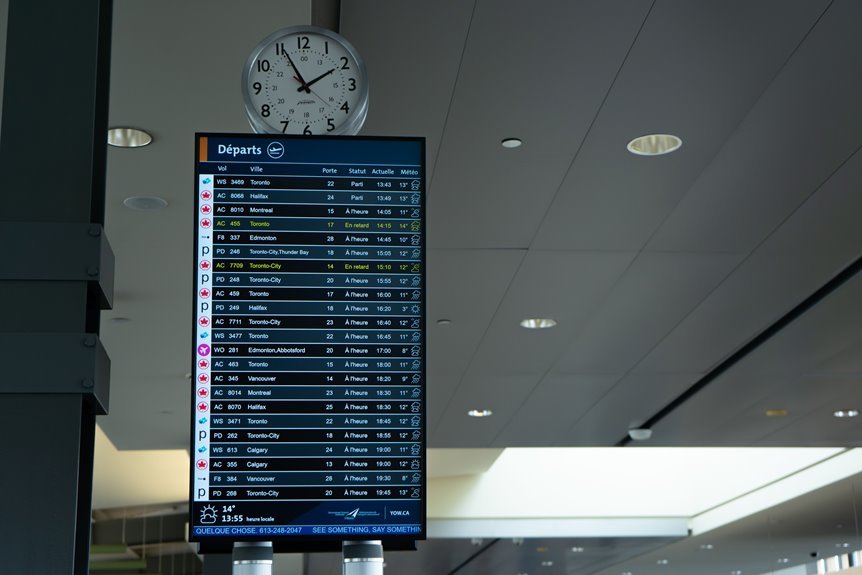
Departure time acts as a pressure point that concentrates action and tests coordination. A fixed deadline sharpens decisions and prioritizes tasks, while anchoring downstream dependencies to a predictable cadence. Handoffs become routine, yet risks rise if reality diverges from the schedule. Briefings, standard procedures, and cross-functional clarity are essential to preserve safety margins. The balance between efficiency and resilience remains fragile, inviting continued scrutiny of how timing shapes every move. Where will the misalignment reveal itself next?
Departure time serves as a pressure point because it directly constrains subsequent actions and decisions, creating a sequence of responses that unfold around a fixed deadline.
The mechanism tightens options, elevates priority of tasks, and standardizes transitions.
Departure timing shapes risk perception by framing potential delays as concrete costs, guiding resource allocation, and prompting proactive mitigation without speculation or fluff.
Scheduling operates as a strategic domino by aligning timing with downstream dependencies and resource rhythms. Scheduling transforms sequences into controlled flows, enabling predictable handoffs, minimized delays, and clearer risk visibility. A disciplined cadence reinforces safety culture, guides crew communication, and sustains system resilience. Decisions become transparent benchmarks, revealing bottlenecks and enabling preemptive adjustments to protect operations and freedom within constraints.
The human factors shaping safe, timely departures center on how individuals perceive risk, manage workload, and interact within teams and workflows.
Decision making under time pressure governs prioritization and redirection.
Crew workload balance affects error rates and communication clarity.
Standardized procedures, briefings, and cross-functional coordination ensure consistency, resilience, and predictable departures while preserving autonomy and safe margins within dynamic environments.
Disruptions in timing create cascading effects that expose mismatches between plans and reality. Messy mismatches emerge when delays ripple through schedules, revealing gaps between timing priorities and on‑the‑ground execution. Calm, methodical assessment follows: identify failure points, reassign tasks, and recalibrate buffers. Clear crew coordination is essential to restore alignment, minimize risk, and preserve operational integrity under shifting conditions.
The core objective is to optimize departure timing by minimizing disruption, ensuring compliant sequencing, and prioritizing safety. It emphasizes delay mitigation, precise scheduling, and transparent decision-making, enabling autonomous freedom within operational constraints and predictable outcomes.
The primary stakeholders impacted by these delays are passengers and airline operations, where aircraft scheduling decisions influence both passenger disruption and timely fleet management, affecting travelers, crew, and service reliability in a globally interconnected aviation environment.
Satire aside, weather uniquely influences departure time decisions through observable weather patterns and wind shear, which pilots and schedulers must quantify; safety margins, fuel planning, and delay management follow, while freedom-seeking audiences recognize procedural discipline as essential.
Historical incidents informing this analysis include meteorological disruptions, turbine failures, and airspace congestion, which shaped departure timing and operational risk assessments. Departure timing is evaluated against contingency plans; operational risk is quantified to balance safety, efficiency, and freedom to operate.
A notable 72% of stakeholders report concern over delay ethics in practice. Managing schedule changes requires transparency, accountability, and proportional communication; the process should minimize harm, clearly delineate responsibility, and assess stakeholder impact to guide ethical decisions.
In the end, the clock never lies. When departure time tightens, every handoff becomes a lit fuse: precise inputs, disciplined checks, and unwavering coordination are no longer optional but critical. A single mismatch reverberates, revealing hidden fragilities and forcing hard choices. Yet behind the cadence of clocks and checklists lies a procedural truth: resilience is earned through preparation, not hope. If schedules hold, safety follows; if they falter, risk closes in with ruthless clarity. The countdown, ominously persuasive, remains unresolved.